

It is easy to file workplace bullying under ‘HR problem’, but in Irish law it is squarely a health and safety matter. The Safety, Health and Welfare at Work Act 2005 places a general duty of care on employers that extends to psychosocial hazards – including workplace bullying, stress and psychological harm. The HSA’s Code of Practice sets out how to identify, prevent, address and resolve bullying, and the HSA has named psychosocial hazards as an enforcement focus. For Irish employers, prevention is both a legal duty and a practical necessity.
Bullying is a psychosocial hazard under the 2005 Act
The Safety, Health and Welfare at Work Act 2005 imposes a general duty on employers to ensure the safety, health and welfare of employees, and that duty extends to psychosocial hazards: bullying, work-related stress and psychological harm. In other words, an employer who ignores bullying is failing a safety obligation, not merely an HR best practice. The HSA’s recent annual reporting has explicitly identified psychosocial hazards and fatigue as a targeted enforcement focus, so this is an area of active regulatory attention.
What the Code of Practice provides
The current HSA Code of Practice came into effect on 23 December 2020, replacing and combining earlier HSA and Labour Relations Commission codes into a single operational document. It gives employers, employees and their representatives guidance on good practice and procedures for identifying, preventing, addressing and resolving workplace bullying. While a code of practice is not law in itself, it is admissible in evidence – following it demonstrates you took reasonable steps, and ignoring it can count against you.
The informal and 'secondary' resolution stages
A notable feature of the current Code is its emphasis on resolving issues informally and early. It is more comprehensive on informal approaches at enterprise level and introduces a second ‘filter’ or secondary stage, where employers can bring a problem-solving approach to situations that feature – or allegedly feature – bullying within a troubled working relationship. The intent is to address concerns before they escalate into formal complaints or litigation, which is better for everyone involved.
What employers should have in place
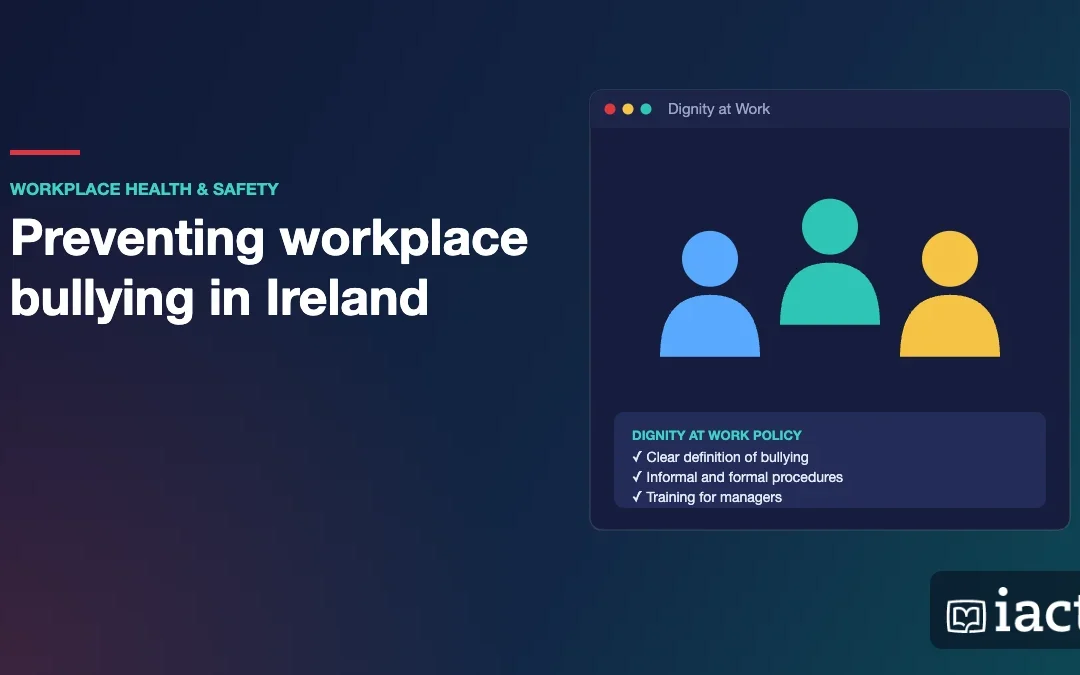
Anti-bullying policies should be drawn up in line with the HSA Code of Practice, the Workplace Relations Commission’s Code, and the relevant IHREC/WRC codes on harassment. A robust policy defines bullying clearly, sets out both informal and formal procedures, names contacts and support, protects against victimisation for raising a concern, and is genuinely communicated to staff rather than filed away. Crucially, it should distinguish bullying from harassment (which relates to the protected grounds under equality law) so that each is handled under the right framework.
Making prevention real, not paper
A policy on a shared drive prevents nothing. Effective prevention means training managers to recognise and respond to early signs, fostering a culture where concerns can be raised safely, and acting consistently when issues arise. Treat bullying as you would any other workplace hazard: assess the risk, put controls in place, and review them. Beyond compliance, the payoff is direct – workplaces that take dignity at work seriously see lower absence, better retention and stronger performance, while those that do not face grievances, claims and reputational harm.
Key takeaways
- Workplace bullying is a psychosocial hazard under the Safety, Health and Welfare at Work Act 2005 – a safety duty, not just HR.
- The HSA Code of Practice (effective 23 December 2020) guides identifying, preventing, addressing and resolving bullying.
- The Code emphasises early, informal resolution and adds a secondary 'filter' problem-solving stage before formal complaints.
- Employers should have a clear anti-bullying policy aligned to the HSA, WRC and IHREC codes, distinguishing bullying from harassment.
- Prevention requires manager training, a safe-to-raise culture and consistent action – not just a policy document.
Train with IACT
IACT offers instructor-led Health & Safety training for teams and individuals across Ireland.
Featured video: Bullying at Work in Ireland: Employer Guide to Harassment and Dignity at Work
Related sources: Code of Practice on the Prevention and Resolution of Bullying at Work – HSA · Bullying at Work – Health and Safety Authority · New Code of Practice on Bullying at Work – Eversheds Sutherland