

PRACTICAL AI AT WORK · ANTHROPIC · CLAUDE
A good sales follow-up shows that the salesperson listened. It reflects the customer’s priorities, answers what can be answered and makes the next step easy. AI can help assemble that response, especially when the source material is scattered across notes and approved service documents.
Claude can work with project context and supplied material, subject to the account’s capabilities and settings. For a sales team, the useful question is how to turn that capability into consistent preparation while keeping commercial judgement with the salesperson.
Separate the customer’s words from your assumptions
Begin with an approved call summary or notes. Ask for a list of stated needs, questions, constraints and agreed actions. Put inferred needs in a separate section. A customer who asks about training for one department has not necessarily requested a company-wide programme.
This distinction also improves internal handovers. Another salesperson should be able to see what the customer actually said, what the team believes might help and what still needs to be asked.
Give the assistant approved service information
Use current course outlines, delivery options and any authorised commercial details. Remove obsolete versions. If a price or date is not confirmed, instruct the assistant to leave it unresolved. A confident sentence about availability can create a problem even when the rest of the email is excellent.
Keep customer information within the tools and access arrangements approved by your organisation. A reusable sales workspace should not become an uncontrolled collection of confidential customer files.
A PRACTICAL WORKFLOW
Ask for a useful response, not a generic pitch
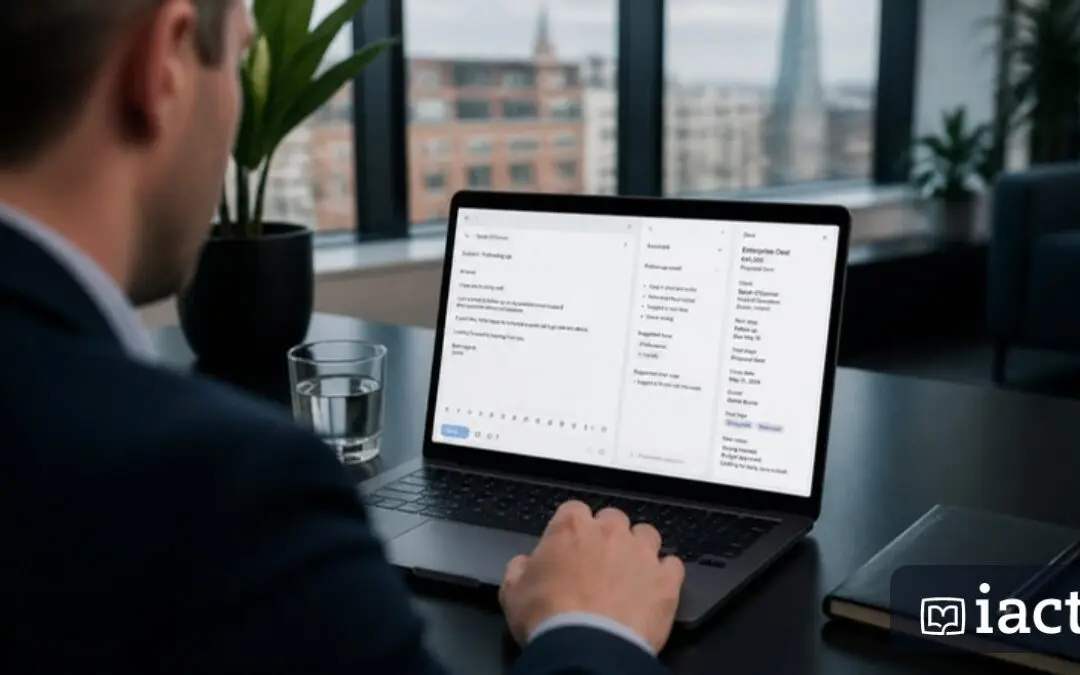
Prepare a draft follow-up using the approved customer notes and service information. Begin with the customer’s two main priorities. Answer the questions supported by the documents, then ask no more than three focused clarification questions. Finish with one practical next step. Do not invent pricing, dates, discounts, outcomes or commitments. Mark missing information separately for the salesperson. Do not send the message.
For example, if a customer wants staff to improve reporting, useful questions might concern their current tools, the reports they produce and the variation in skill levels. Asking those questions is more helpful than immediately attaching every available course outline.
Prepare for the next conversation
Ask Claude to suggest a short call plan based on the unresolved points. Include questions that test understanding: “What would the team be able to do afterwards that it struggles with today?” or “Which recurring task takes the most effort?” Keep the conversation exploratory rather than using AI-generated objections as a script to force a sale.
Review the draft against the source notes before sending it. Check names, attachments, links and the proposed next step. The salesperson should be able to explain every promise in the final message.
Measure relevance as well as speed
Track the time to produce an approved follow-up, how often it needs correction and whether customers respond with useful information. Faster output is not a win if it creates more confusion. Sample a few messages each week and use the findings to improve the shared brief.
ChatGPT and Gemini can support the same working pattern with suitable approved inputs. The choice of platform matters less than the quality of the notes, the clarity of the offer and the review before sending. Bespoke training can turn those habits into a practical sales workflow.
Sources and further reading
Product information checked 4 November 2026. Features and availability depend on your plan and administrator settings. Examples and suggested workflows are illustrative.